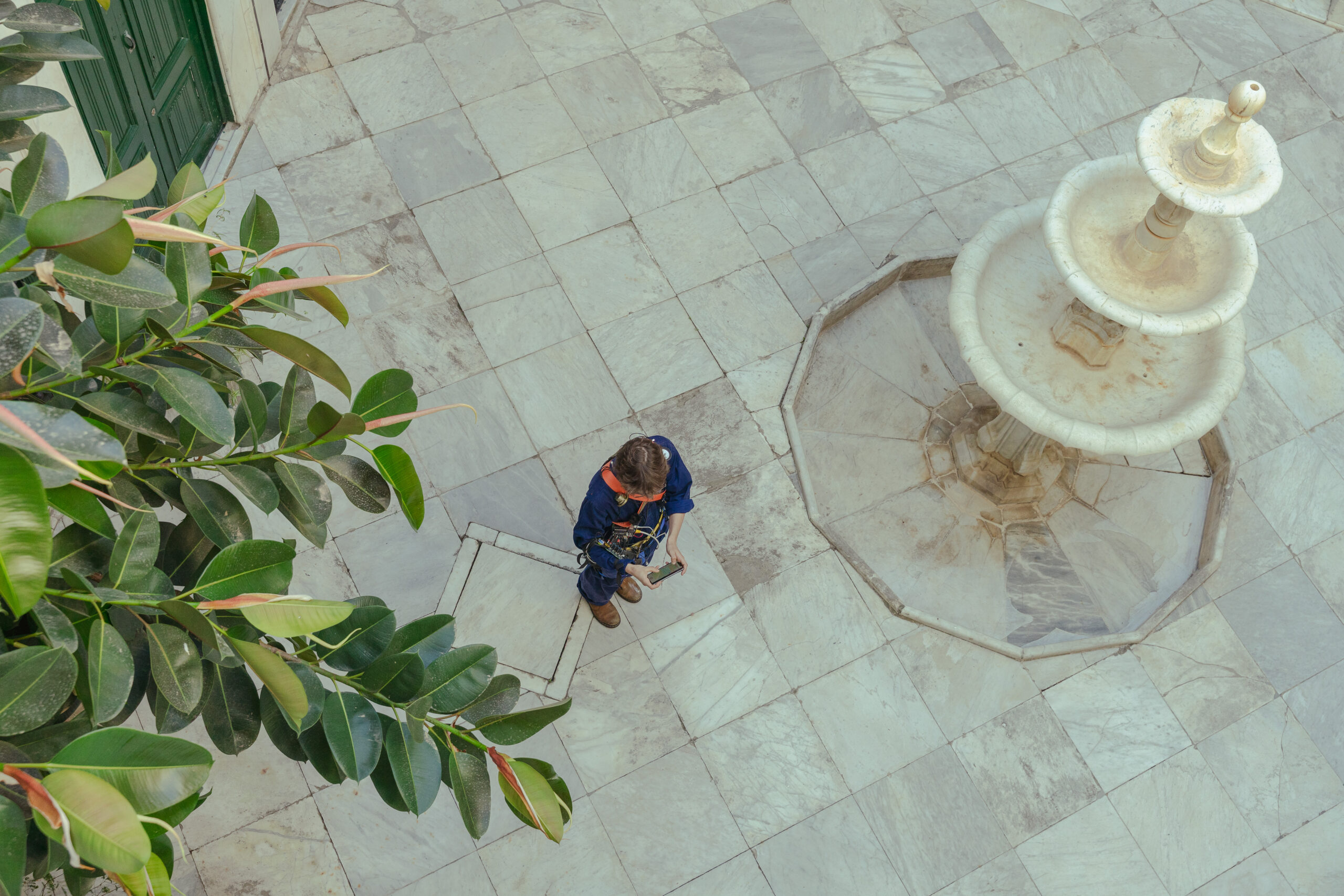
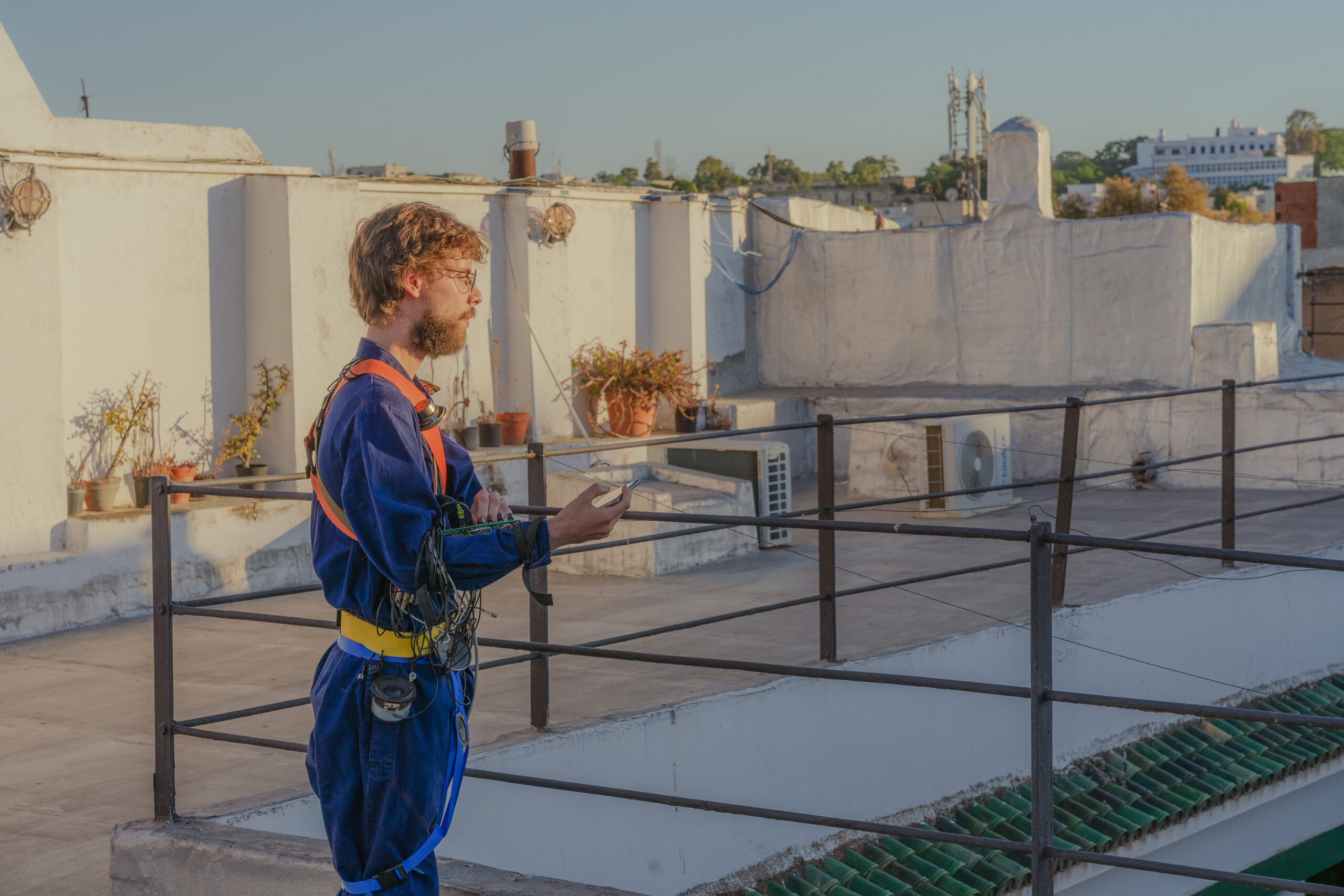
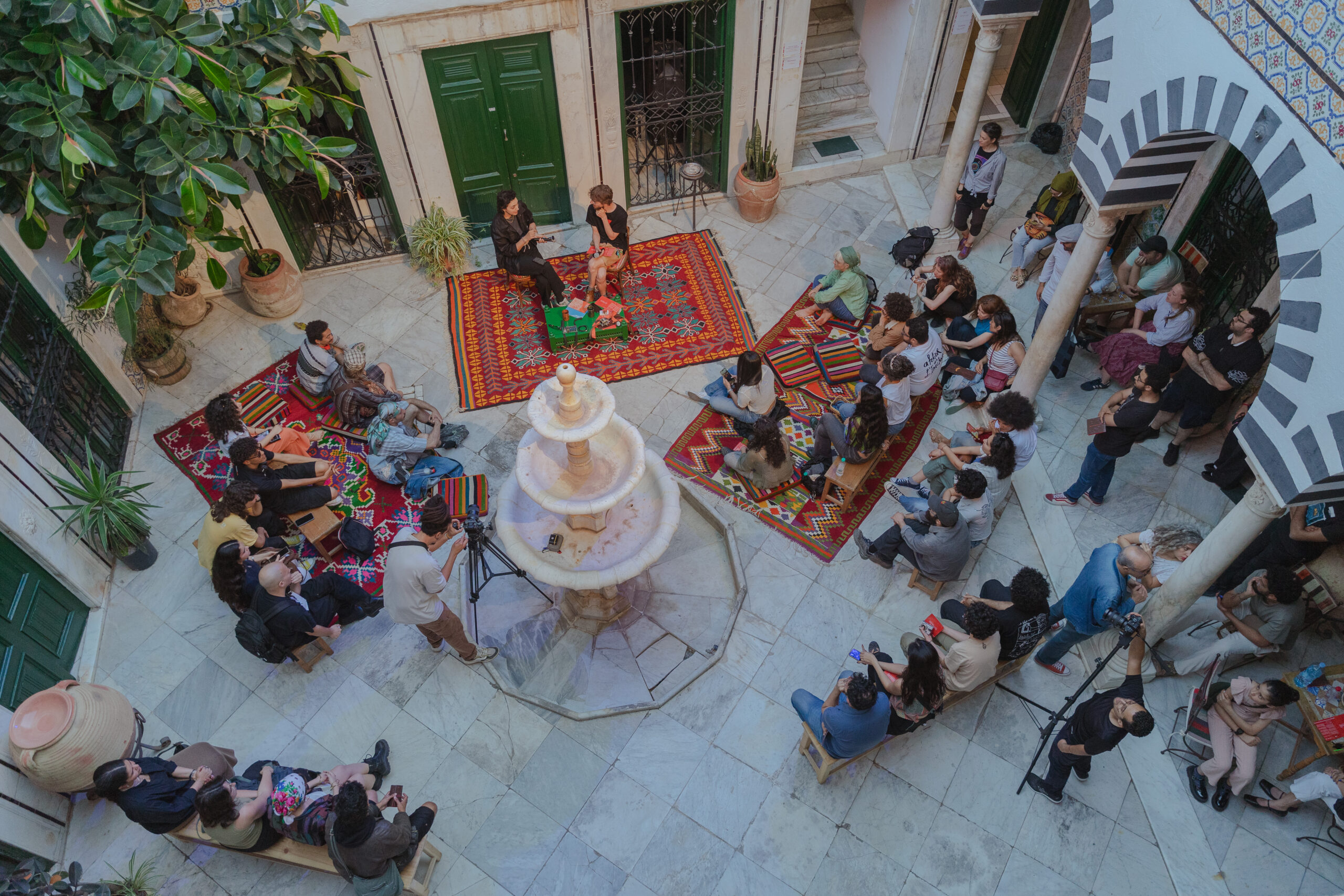
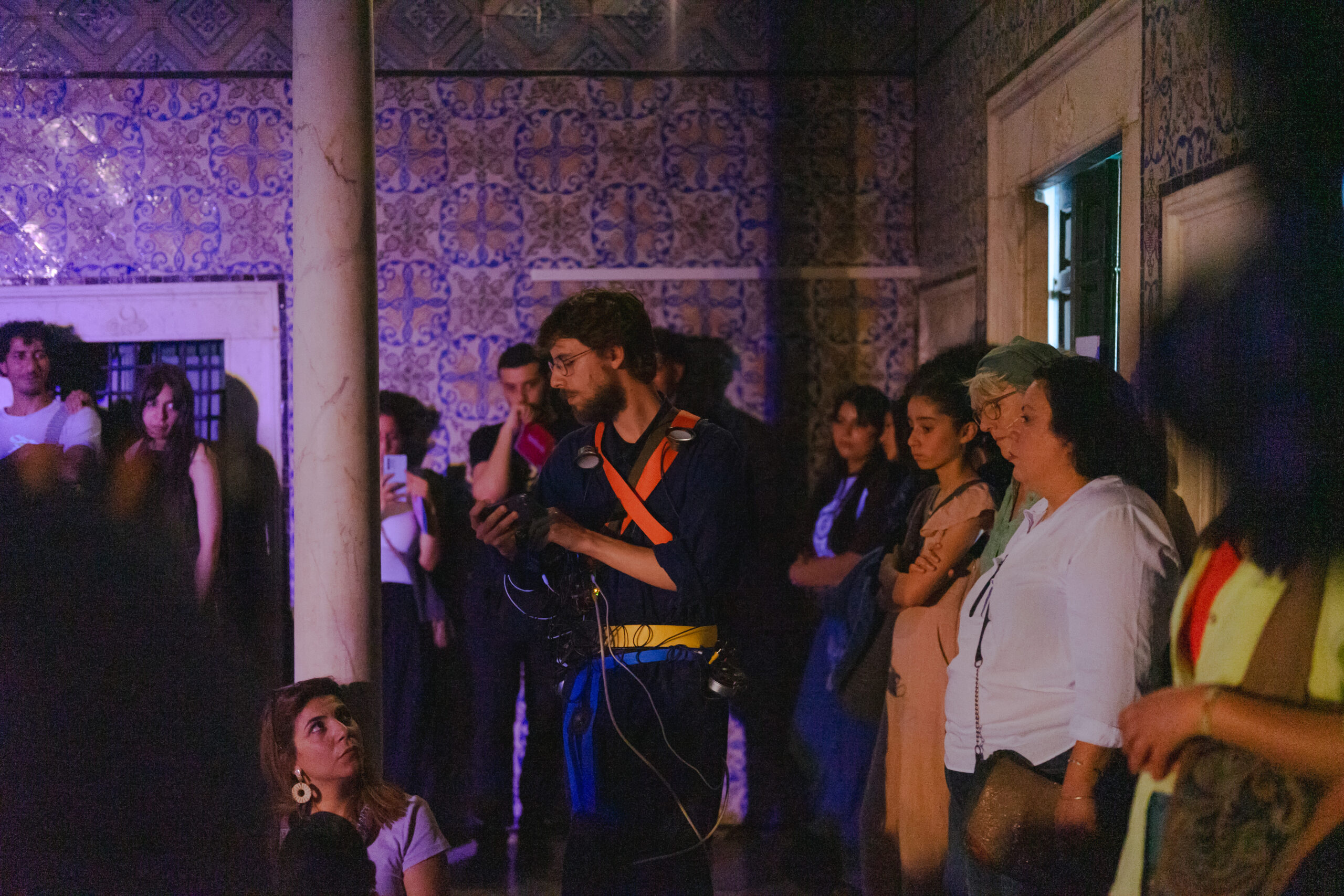
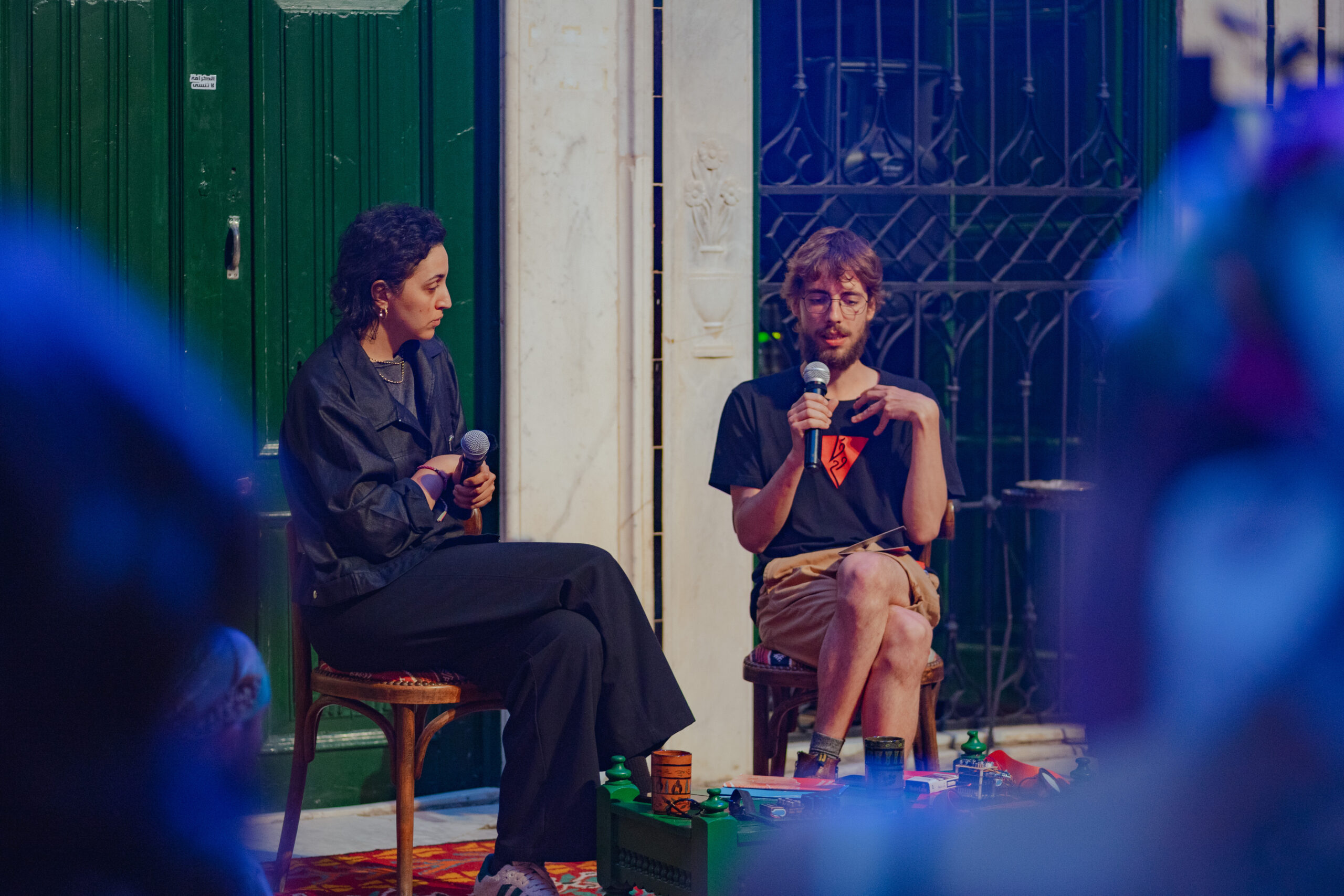
Alongside his own research, Pedro Incenso Latas’s residency was also shaped by encounters and exchanges. Throughout his stay in Tunis, the Portuguese artist took part in a series of workshops, discussions and public events organised by L’Art Rue, sharing his practice with different communities and creating new spaces for dialogue around sound.
Slash Transition
What happens when a city becomes a sound archive?
During his first stay in Tunis with L’Art Rue in February 2026, Portuguese artist Pedro Incenso Latas immersed himself in the medina. His research began to take shape through encounters with local artists and residents, and through a growing interest in the way language is carried by the body. He also met Tunisian artist Oussama Menchaoui, who was taking part in the same Slash Transition programme and was undertaking his own residency with Mutant Radio in Georgia. From this process, sound became a way to explore the relationship between memory, language and the spaces we inhabit.
When Pedro returned in May 2026 for the main residency, the medina became the starting point for his research. He worked with language, voice, rhythm and the sounds of the neighborhood, combining field recordings with collective sessions involving residents and musicians, as well as performative experiments. His research took him into different spaces and encounters. But the residency was also about sharing his practice and research with others. Throughout his stay, he took part in a series of events and activities organised by L’Art Rue.
On 10 May, Pedro worked with young people and local education professionals in a practical workshop organised with L’Art Rue’s Art & Education team, exploring listening, rhythm and sound creation within the medina.
The following day, he introduced students and musicians at the Higher Institute of Music of the University of Tunis to creative coding and digital sound experimentation. Through practical exercises with Max/MSP, participants explored digital sound processing, synthesis and computer-assisted composition, followed by discussions with Pedro.
On 12 May, L’Art Rue hosted a conference and roundtable bringing together artists and researchers around language, identity and sound, with Amen Nciri, Aicha Kallel, Dhia Bousselmi and Hager Ben Driss. The evening continued with a musical reading and improvisation by Pedro, with texts read by Amen Nciri and Mazen Alsafadi.
The following week, the focus shifted towards collective creation. On 15 and 16 May, Pedro brought together musicians, cultural practitioners and residents for a workshop exploring how music could be co-created within the medina. The sessions provided a space to experiment with shared forms of creation, while identifying local resources and challenges. A public roundtable the following day extended these conversations to questions around sustainable models for musicians, local collaboration and social and environmental challenges.
All these encounters and experiments gradually fed into the final work اسكت (Askot).
Presented on 23 May, the performance offered an immersive exploration of language as memory and embodied experience. Developed through Pedro’s research, اسكت moves through the acoustic landscape of the medina — from the adhan and shopkeepers’ calls to Sufi breathing practices, sermons, whispers and fragments of conversation.
These sounds become a living archive of voices and resonances, preserving traces of a place through what can be heard.
From the first explorations of the medina to the final performance, Pedro’s residency became a process of research, immersion and archiving, rooted in what he learned from the people and the place, and carried forward through his own work.
By listening closely to the voices and rhythms of the neighbourhood, Pedro’s work brought together traces of the medina and the stories embedded in its soundscape, while opening up conversations about how language, memory and community shape our experience of an urban space in transition.
اسكتultimately offers an illustration of how sound can reveal the city through collective stories and shared memories.