One poetic element emerged already during Louis’s study visit: the idea of “fog” – a foggy / blurry situation surrounding the area, which led later to condensed fog in the “pillows”. The artist was initially inspired by reflections on the fog, and these hanging objects, the pillows, have become a metaphor for the fragile conditions under which independent cultural spaces often operate.
Later, working from a temporary studio in Halle 1 at St. Bartlmä (which was made possible by the association SNKTBRTLM), Naudin has immersed himself in one of Innsbruck’s most distinctive post-industrial environments – a self-organized cultural space that has become an important cultural hub for (not only) independent artistic productions, experimentation and diverse community life.
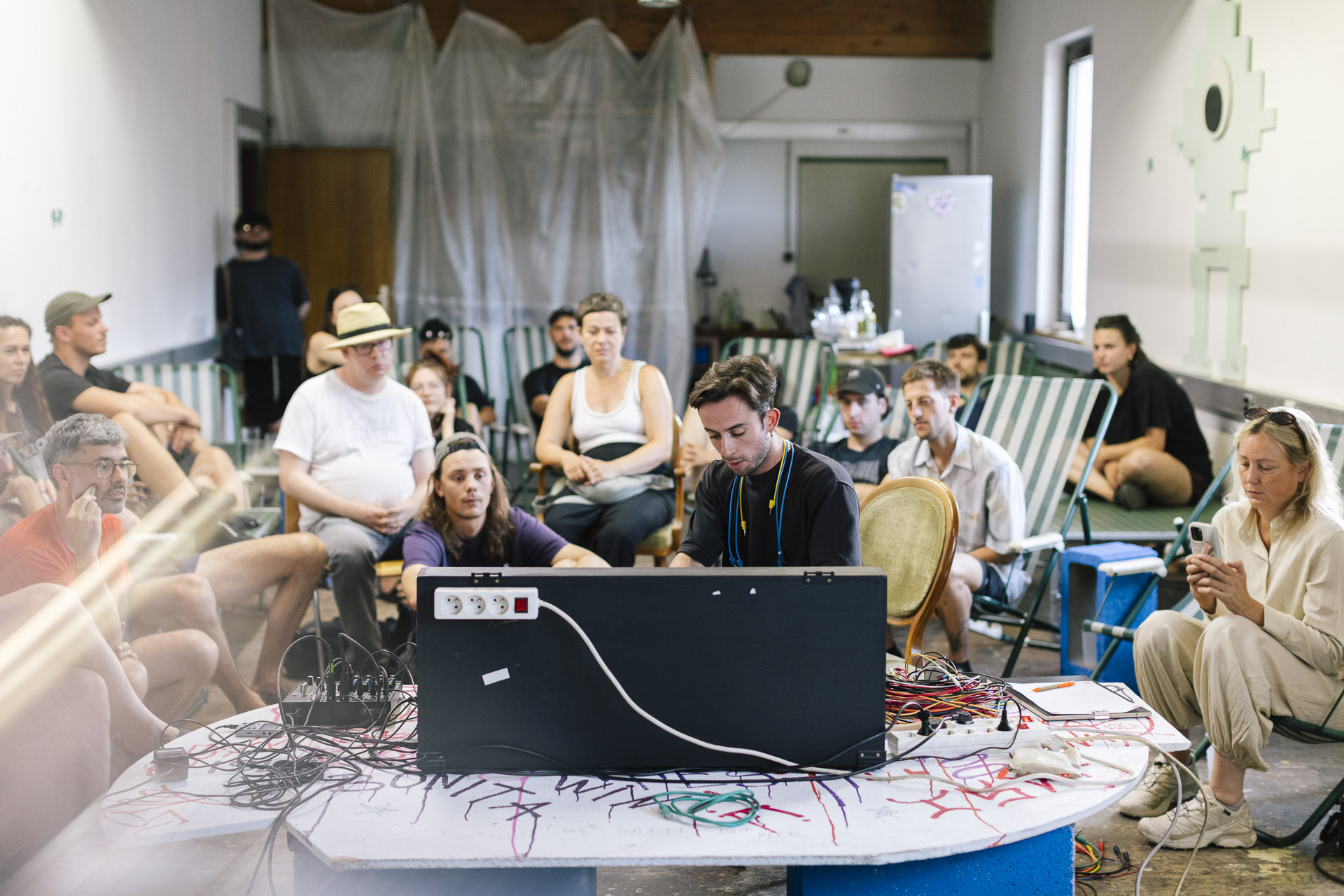
At the core of the project is an extensive sonic research process. Using custom electromagnetic antennas, Naudin has been recording signals emitted throughout the area alongside field recordings. Through continuous processing, manipulation and resampling, these recordings evolved into sonic language and a composition that resonates with the St. Bartmä area.
Yet as the residency unfolded, the project gradually shifted beyond sonic research. Living and working alongside the St. Bartlmä community, Naudin became increasingly engaged with the people who shape this unique environment. Their stories, everyday encounters and shared commitment to maintaining an independent cultural space became central to the artistic process. This work also echoes the former foundry; its repetitive movements and metallic soundscapes are translated into slow, ritualistic musical structures, connecting memories of industrial labour with the contemporary.
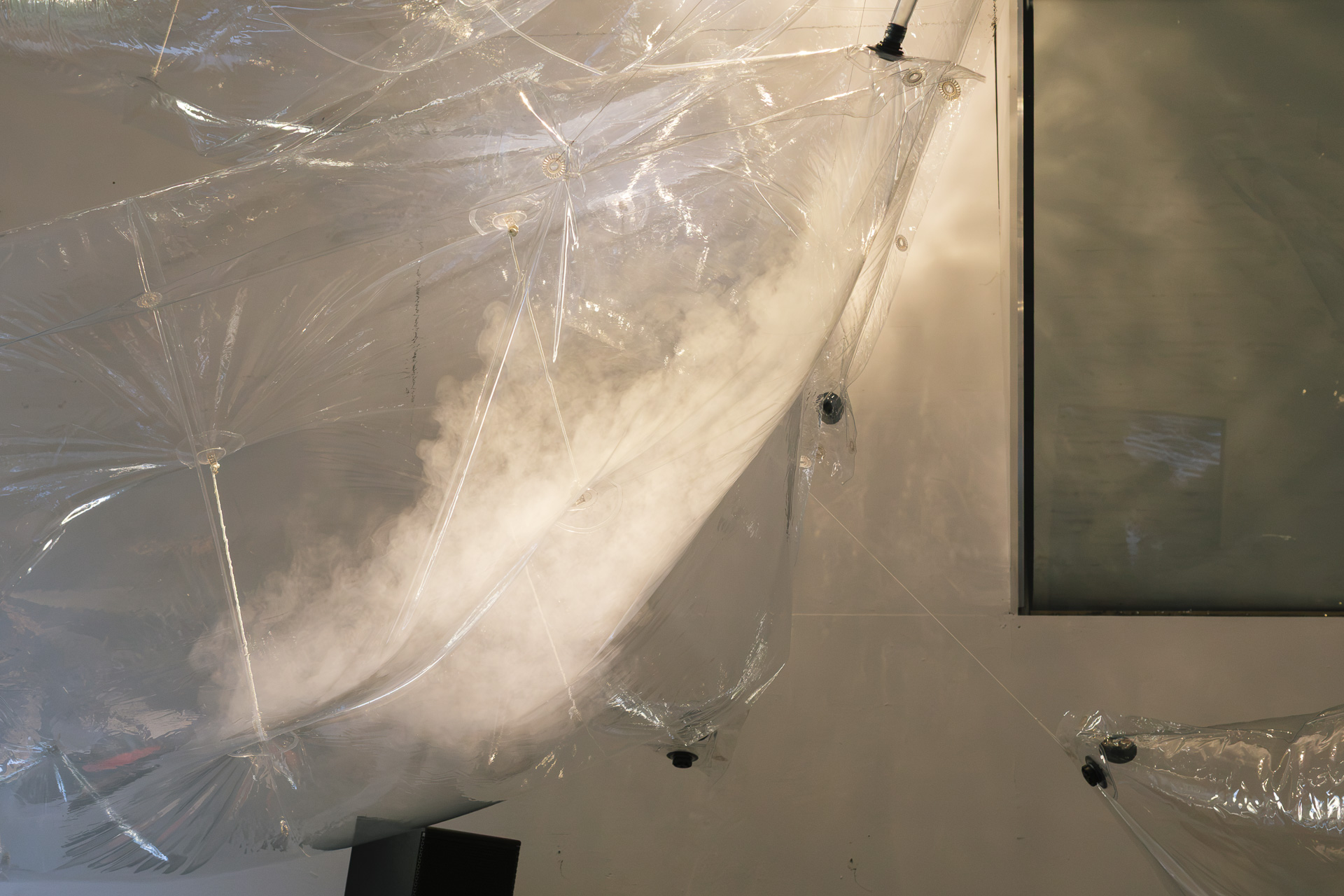
Alongside the sound composition, Collective Commotion has been developed as an immersive audiovisual environment. In collaboration with local architects Luca Guarino and David Christian, who have made the “fog pillows installation” setup and have made the complex technical part behind the installation function, negotiating every step with the artist himself. On the other side, new media-driven artistic and architectural research studio exploring the future of our spatial experiences and communication – MeAndOtherMe – has created this digital visual layer of the installation, currently responding to the presence and movement of visitors, transforming the installation into a living environment shaped through participation.
The piece builds itself upon the presence and participation of individuals, collectives and bypassers. It translates them into an intriguing and self-regulating spatial system through volumetric cameras capturing and offering interactivity. It echoes the former foundry; its repetitive movements and metallic soundscapes are translated into slow, ritualistic musical structures, connecting memories of industrial labour with contemporary life.

We would like to thank the entire St. Bartlmä community for their generosity and openness throughout the residency, especially SNKTBRTLM, Marco Russo and Barbara Alt (local Facilitators), Me AndOtherMe, Judit Widauer, Bartibae, Luca Guarino & David Christian, Verschubu, Zunder Festival, Christoph Hinterhuber, Julia Hafemann, Danijela Oberhofer Tonković, Charly Walter and everyone who contributed to making this residency possible.
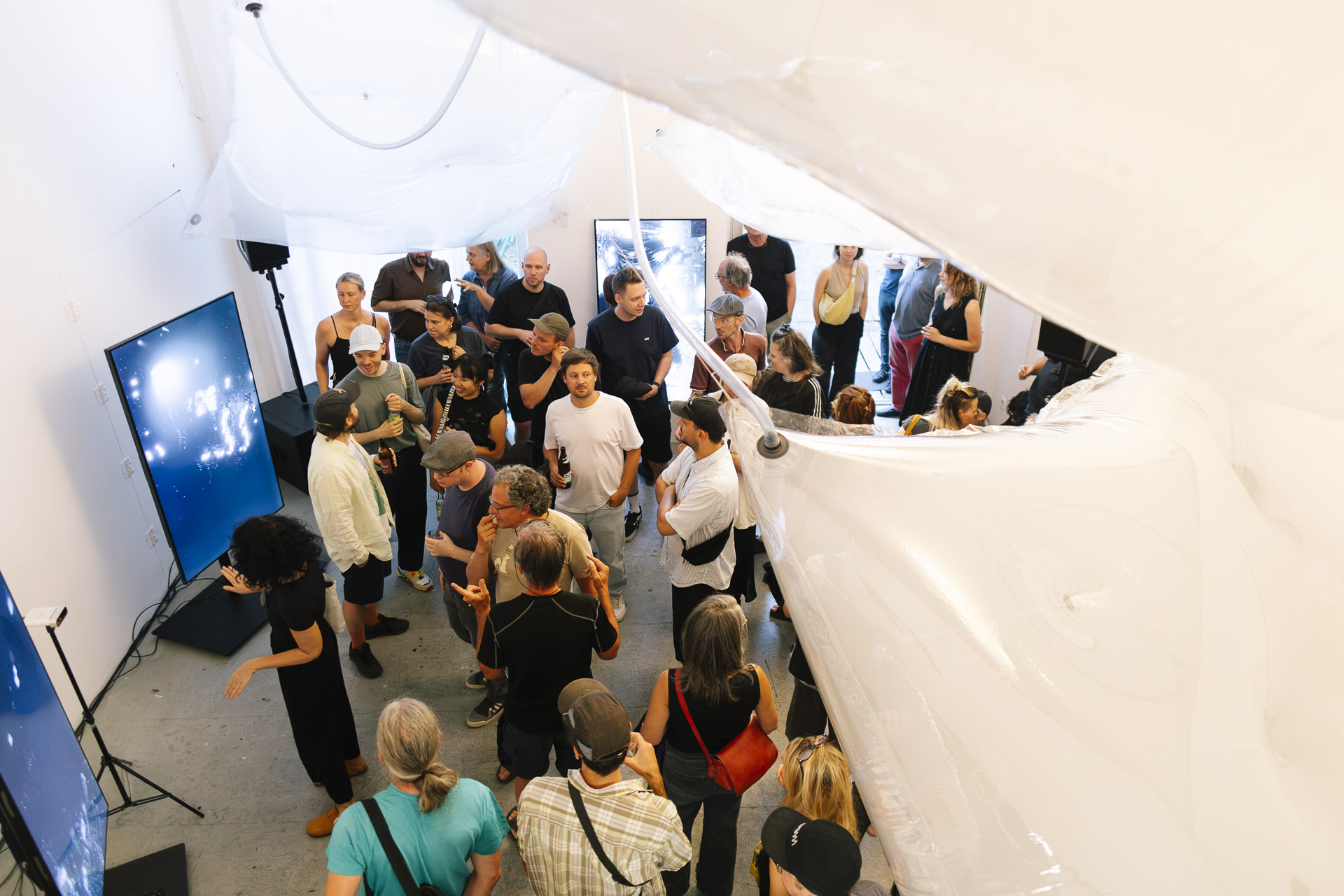
The site-specific audiovisual work Collective Commotion, developed by Louis Naudin during his SLASH Transition residency, was presented at its opening on 9 July at Openspace Innsbruck.
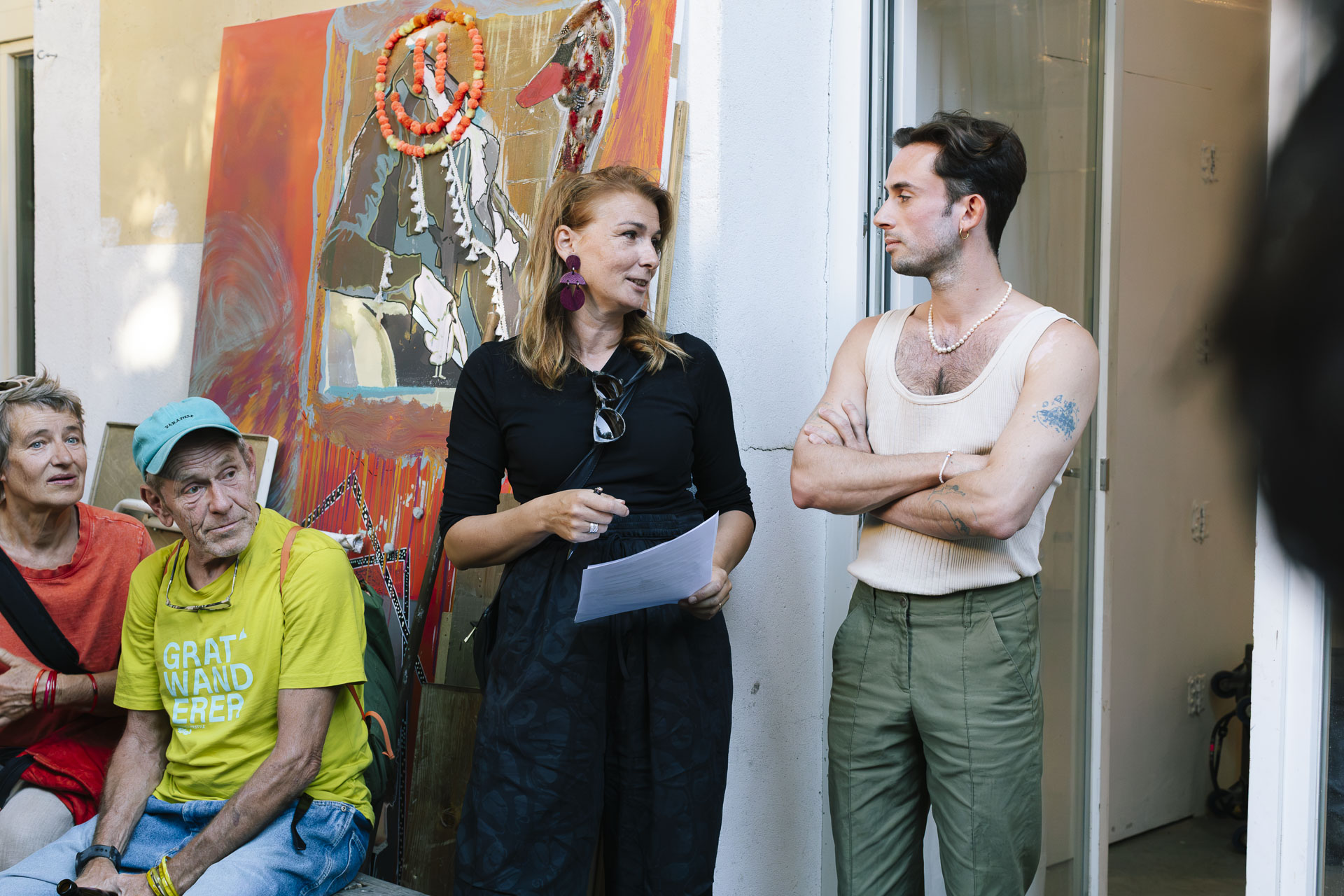
The opening also featured an Artist Talk and audience discussion, “Sound, Community and Transition – Artistic Practices in Times and Places of Change”, exploring how artists can engage with territories undergoing social, spatial and cultural transformation.
The discussion brought together Louis Naudin (Überkeine, Paris), Judith Widauer (architect and cultural producer from St. Bartlmä, Innsbruck), Ben Wheeler (musician, musicologist and resident at Mutant Radio, Tbilisi), and Pacôme Soissons (architect, researcher and cultural producer, France/Switzerland), moderated by Danijela Oberhofer Tonković, coordinator and curator of SLASH Transition in Austria.
by Danijela Oberhofer Tonkovic